The details that make a waterfront usable
A jetty gets the attention, but the piles, ramps and steps around it decide whether your waterfront is actually easy and safe to use. Waterlink has planned these elements for Sydney waterfront homes since 1995, either as part of a new jetty design or as additions to an existing structure.
What is a pile mooring?
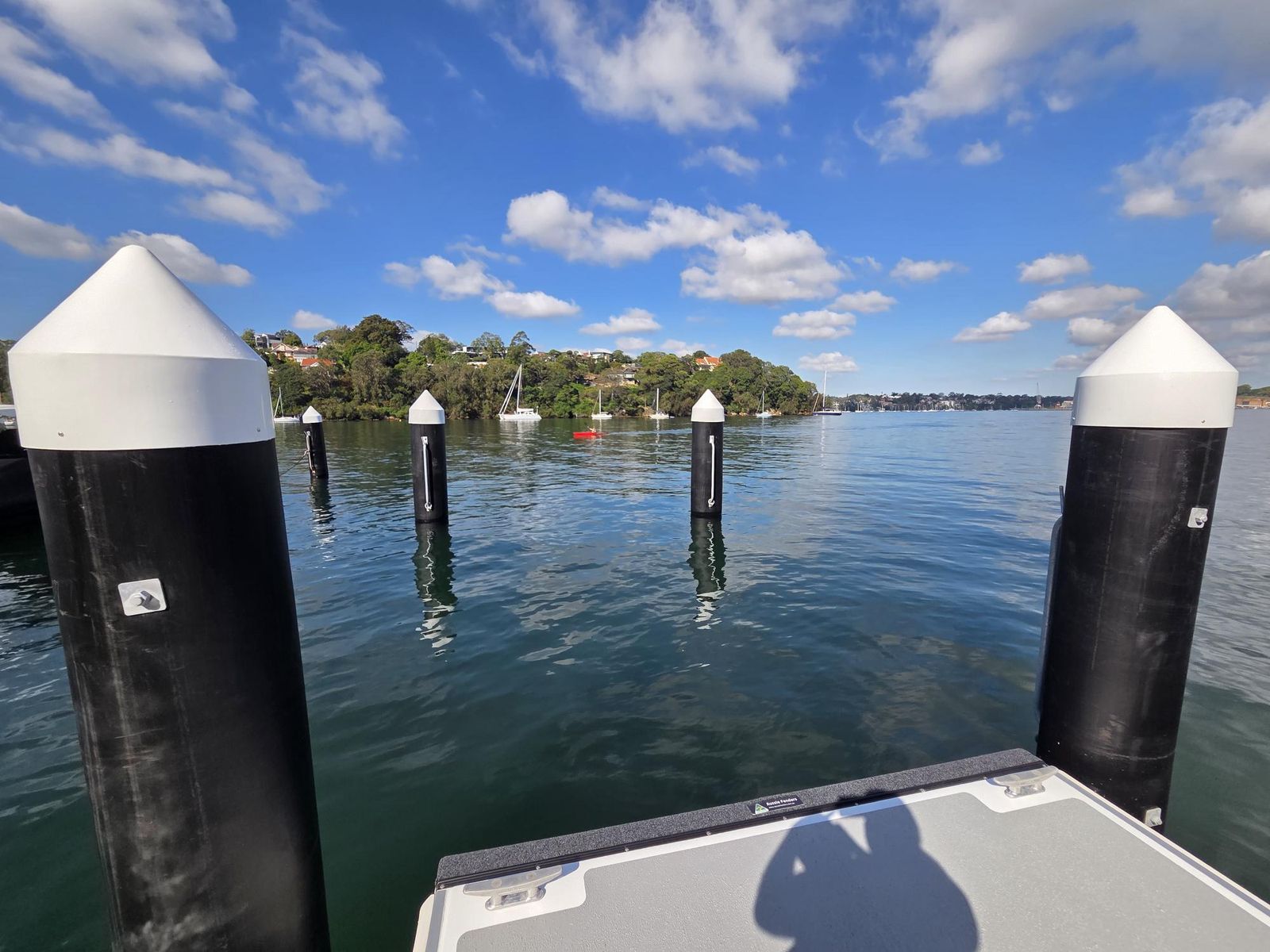
A pile mooring holds a boat in a fixed position between piles driven into the seabed, usually with lines from the bow and stern to the piles. Because the boat can't swing, it takes up a predictable amount of water and sits in the same place at every tide. Mooring piles are also used to hold a floating pontoon in position.
Pile mooring vs swing mooring
- Swing mooring: a single anchor point on the seabed with a buoy. The boat swings around it with the wind and tide, so it needs a large circle of clear water.
- Pile mooring: the boat is held between fixed piles. It uses less space and keeps the boat steady, which suits berths close to a private jetty.
Swing moorings in NSW are generally licensed separately from jetty and pile approvals. Mooring piles attached to your waterfront structure are typically assessed as part of it.
Mooring dolphin piles
A mooring dolphin is a pile, or a group of piles tied together, standing on its own in the water rather than forming part of a walkway. Dolphins give a boat something solid to tie to or lie against, and are often used to extend a berth beyond the end of a jetty.
Mooring pile design
- Layout. Pile positions are planned around the size of your boat, how you want to berth it and the space off your frontage.
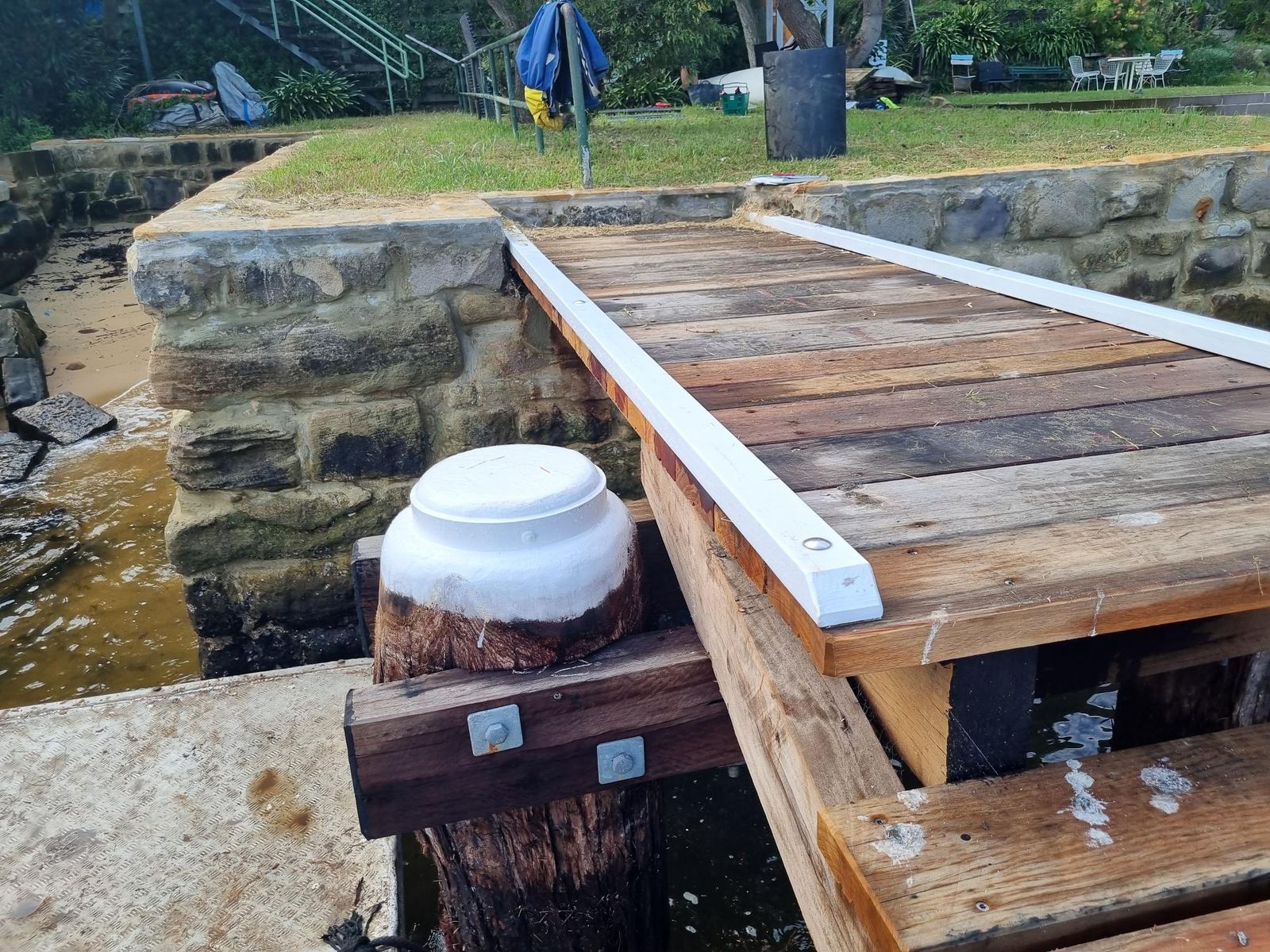
- Length and embedment. Piles need to reach and hold in the seabed you have, whether that's rock, sand or deep mud, and stand clear of the water at high tide.
- Material. Timber, steel and concrete piles each have their place, depending on durability in salt water and the look of the rest of your waterfront.
- Pontoon guides and fenders. Where piles hold a pontoon, the guides have to let it rise and fall freely with the tide.
Pile installation itself is carried out by a marine contractor working to the approved design.
Jetty ramps and gangways
When a fixed jetty connects to a floating pontoon, a hinged jetty ramp (often called a gangway) bridges the gap. As the tide changes the ramp gets steeper or flatter, and a ramp that is too short becomes a slide at low tide. We plan the ramp length and the pontoon position together so the slope stays manageable across the tides you get, with handrails and a non-slip surface.
Jetty steps and waterfront access
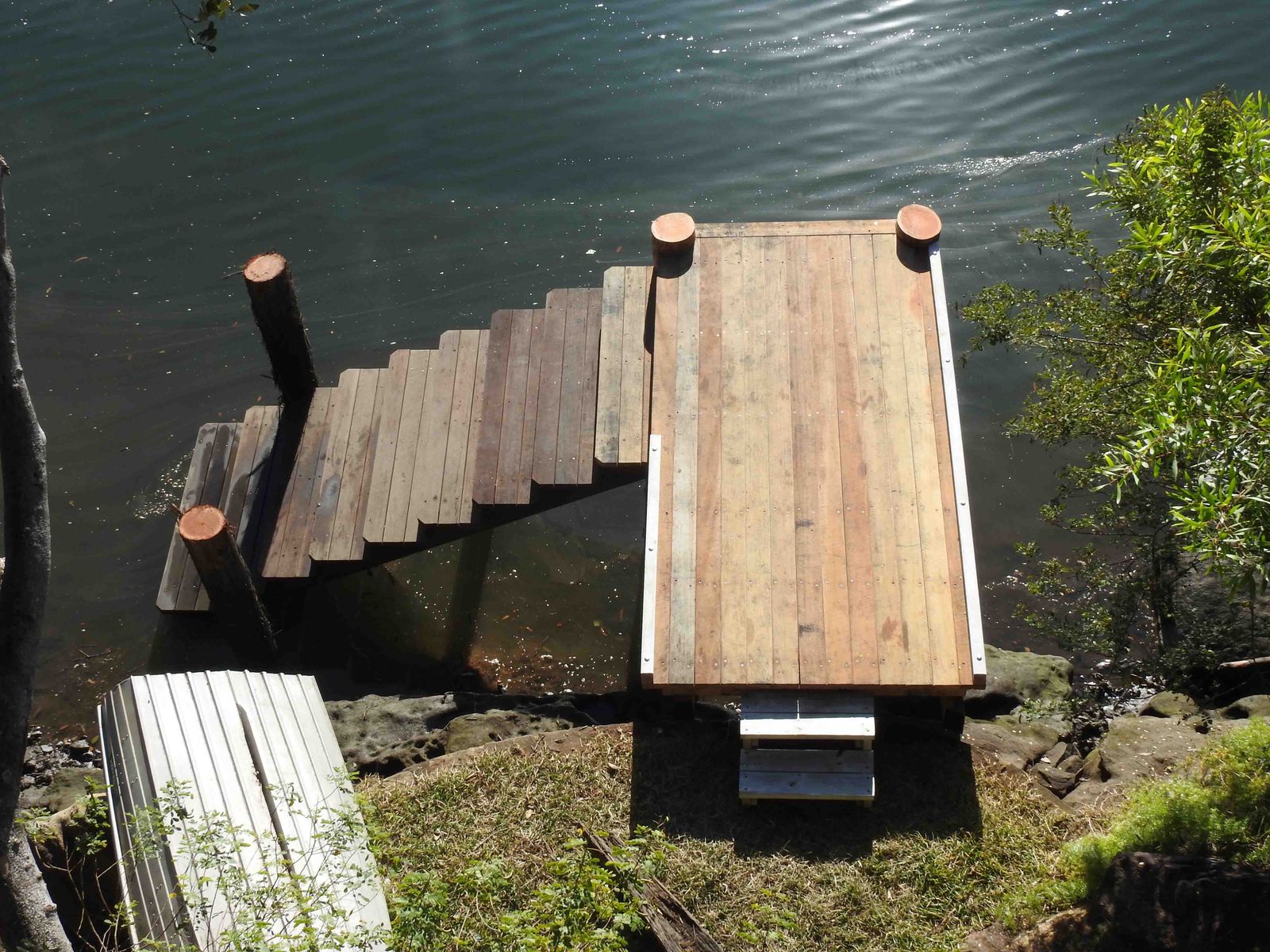
Jetty steps connect the garden, seawall and jetty, and tidal steps let you get down to the water itself. Steep jetty steps are one of the most common complaints on older waterfronts. Good step design means:
- a comfortable, consistent rise and going on every step
- handrails where they are needed
- surfaces that stay safe when wet or covered in weed in the tidal zone
- fitting in with existing sandstone, seawalls and landscaping
Approvals and existing structures
New piles, ramps and steps that extend over the water are generally treated as water-based development and need consent, just like a jetty. Our jetty approval and DA guide explains the process. If you are replacing worn piles or a damaged ramp, start with a jetty pile inspection so you know exactly what needs attention.