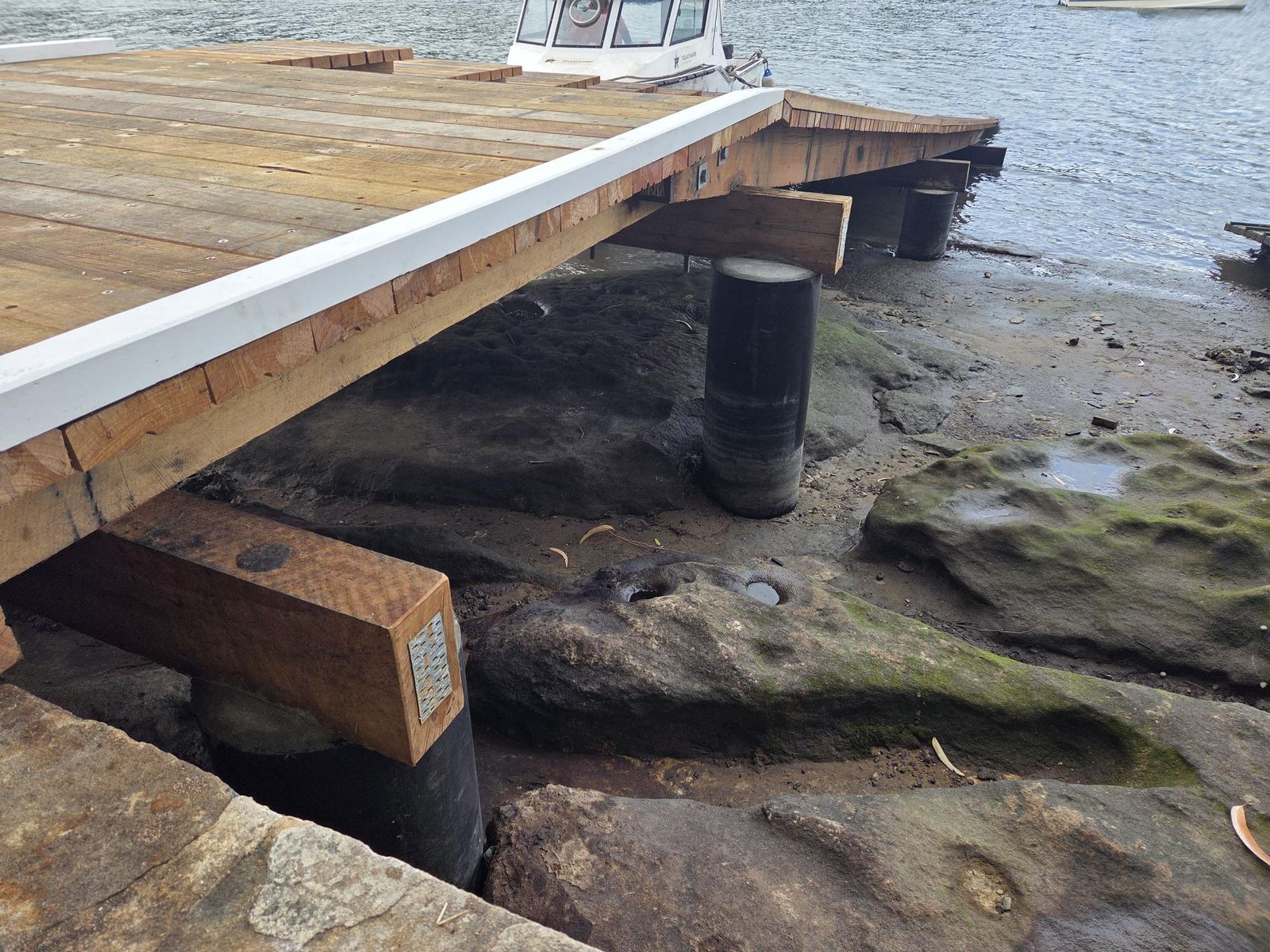
Know what condition your jetty is really in
Jetties, skids, piles and steps live in one of the harshest environments there is. Salt water, tides, marine borers, boat wash and storms all take their toll, and much of the damage is hidden below the deck or under the waterline. A structural inspection tells you what is actually going on before you spend money on jetty repairs.
Waterlink has been planning and assessing waterfront structures on Sydney Harbour and its rivers since 1995. Our reports give you a clear picture of the structure's condition and practical recommendations for what to do next.
When to get a jetty inspection
- Before jetty repairs. A report tells you exactly what needs fixing, so repair quotes cover the right work.
- Buying a waterfront home. A jetty or skid can be a big part of the value, and an expensive surprise if it needs replacing.
- Before selling. Knowing the condition of your waterfront structures helps you answer buyers' questions.
- After a storm or a boat strike. Damage below the deck isn't always obvious from the shore.
- When something feels wrong. Movement, sagging, loose decking, rust stains or soft timber are all signs worth checking.
Jetty inspection checklist
Every structure is different, but a jetty inspection generally looks at:
- Piles: rot, marine borer attack and loss of section at and below the waterline in timber; cracking and spalling in concrete; corrosion in steel; and any lean or movement.
- Bracing: missing, loose or corroded braces between piles.
- Headstocks and bearers: the beams on top of the piles, checked for decay, splitting and sound connections.
- Joists, decking and fixings: soft or broken boards, loose or corroded bolts, screws and brackets.
- Ramps and steps: hinges, treads, slope and slip resistance.
- Handrails: secure, complete and sound.
- Pontoons and guides: floats, frames and pile guides moving freely with the tide.
- Scour and erosion: loss of seabed around piles and undermining where the jetty meets the seawall.
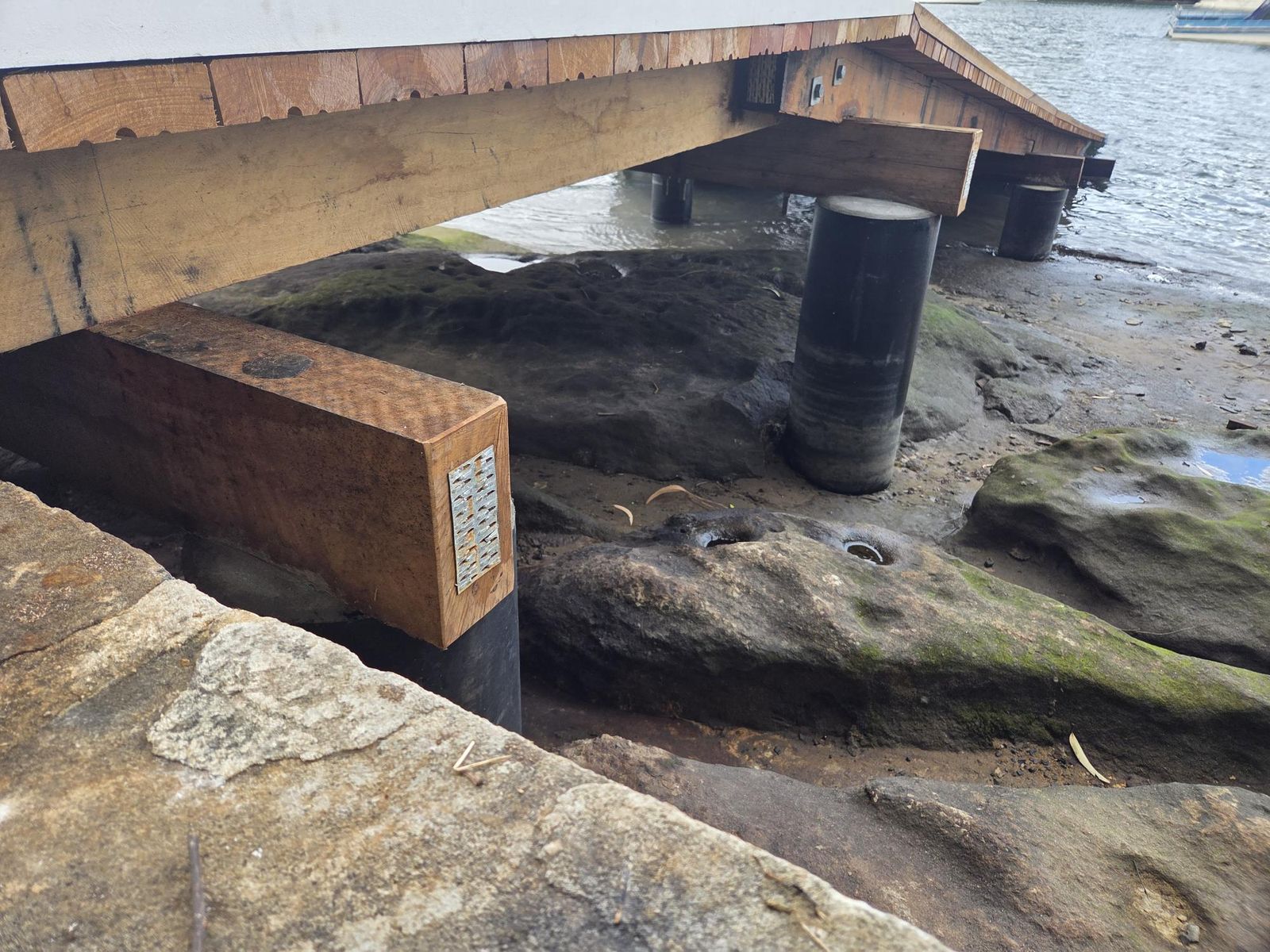
Jetty pile inspection
Piles carry the whole structure, and the worst damage is often where you can't see it: in the tidal zone and below the waterline. A pile inspection looks for loss of section, borer damage, cracking or corrosion, and checks that the piles are still plumb and firmly embedded.
What you get
A written report with photographs that sets out what we found and what we recommend:
- Repair: targeted jetty repairs to fix specific elements and extend the structure's life.
- Replace: where repairs no longer make sense, we explain why and can plan the replacement.
- Monitor: items that are fine for now but worth checking again.
The report gives you something concrete to take to the marine contractor who carries out the repair work, so every repair quote covers the same scope.
Jetty maintenance
Regular jetty maintenance keeps repairs small: keep decking clear of slime and weed, check fixings and handrails, and look for movement after storms and king tides. For structures on Crown land, Crown Lands' information for licence holders says licence holders must keep their structures in good condition, and that repairing, replacing or altering a structure can itself need consent, so check before major works.
From report to replacement
If it's time for a new structure, see our jetty design ideas and layouts, what a new jetty costs and our jetty approval guide, since replacement structures generally need consent too.