Why there's no single price for a jetty
"How much does a jetty cost?" is one of the first questions every waterfront owner asks, and the honest answer is that it depends on the site. Two jetties that look similar from the house can differ a great deal in cost once you account for water depth, the seabed, access for marine equipment and the approvals each one needs. A price you find online for a jetty somewhere else in Australia tells you very little about a jetty on your stretch of Sydney Harbour.
Waterlink has planned waterfront structures for Sydney homes since 1995. We don't build jetties, so we have no interest in selling you a bigger one. What we can do is explain what drives the cost, and plan a structure that does what you need without paying for what you don't.
What affects the cost of a private jetty
Length and water depth
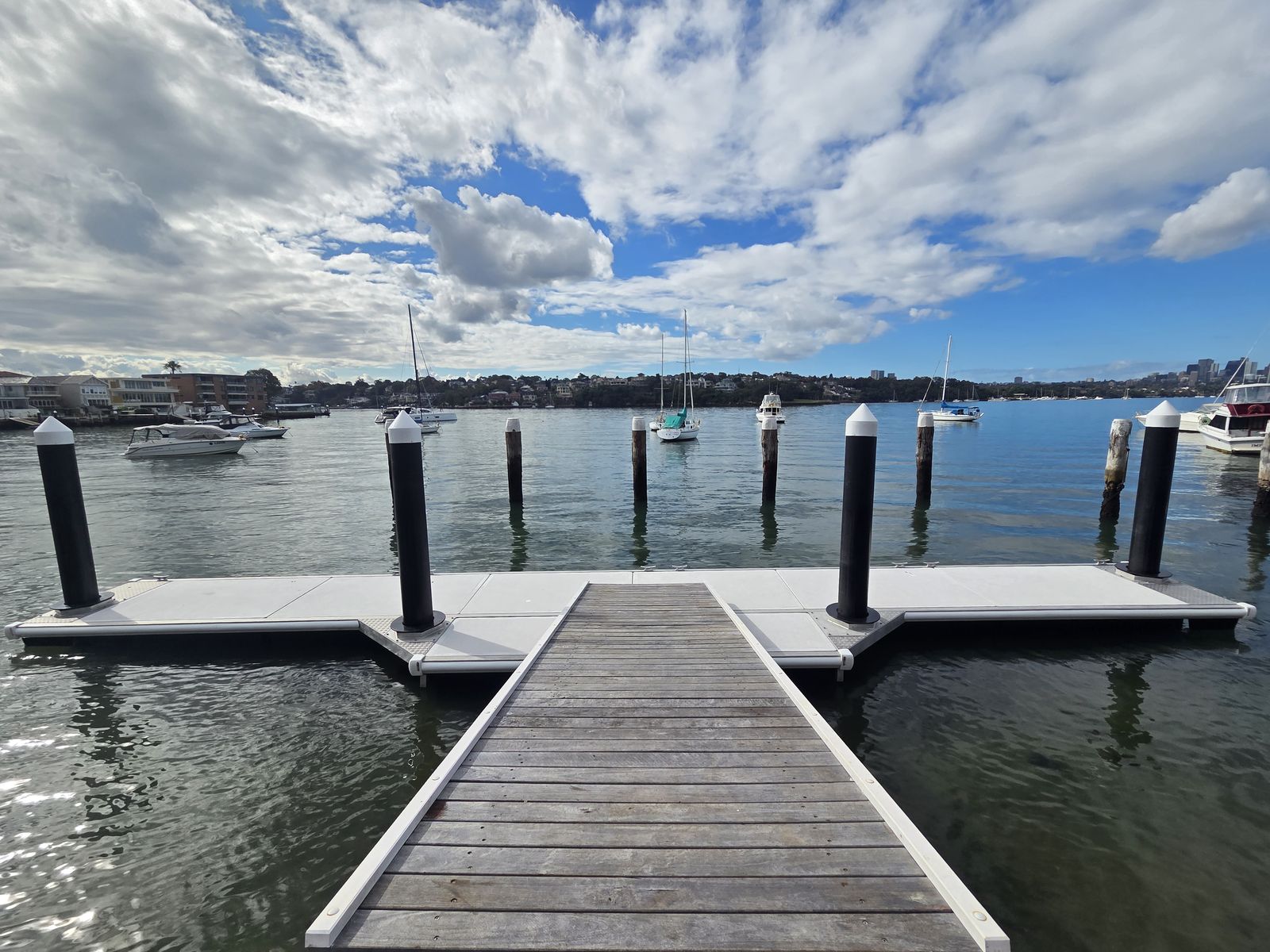
The further a jetty has to reach to find usable water at low tide, the more walkway, piles and bracing it needs. On shallow frontages, the length needed for boat access is usually the biggest single driver of jetty cost. Deeper water close to shore keeps the jetty short, but piles in deeper water are longer.
Number and type of piles
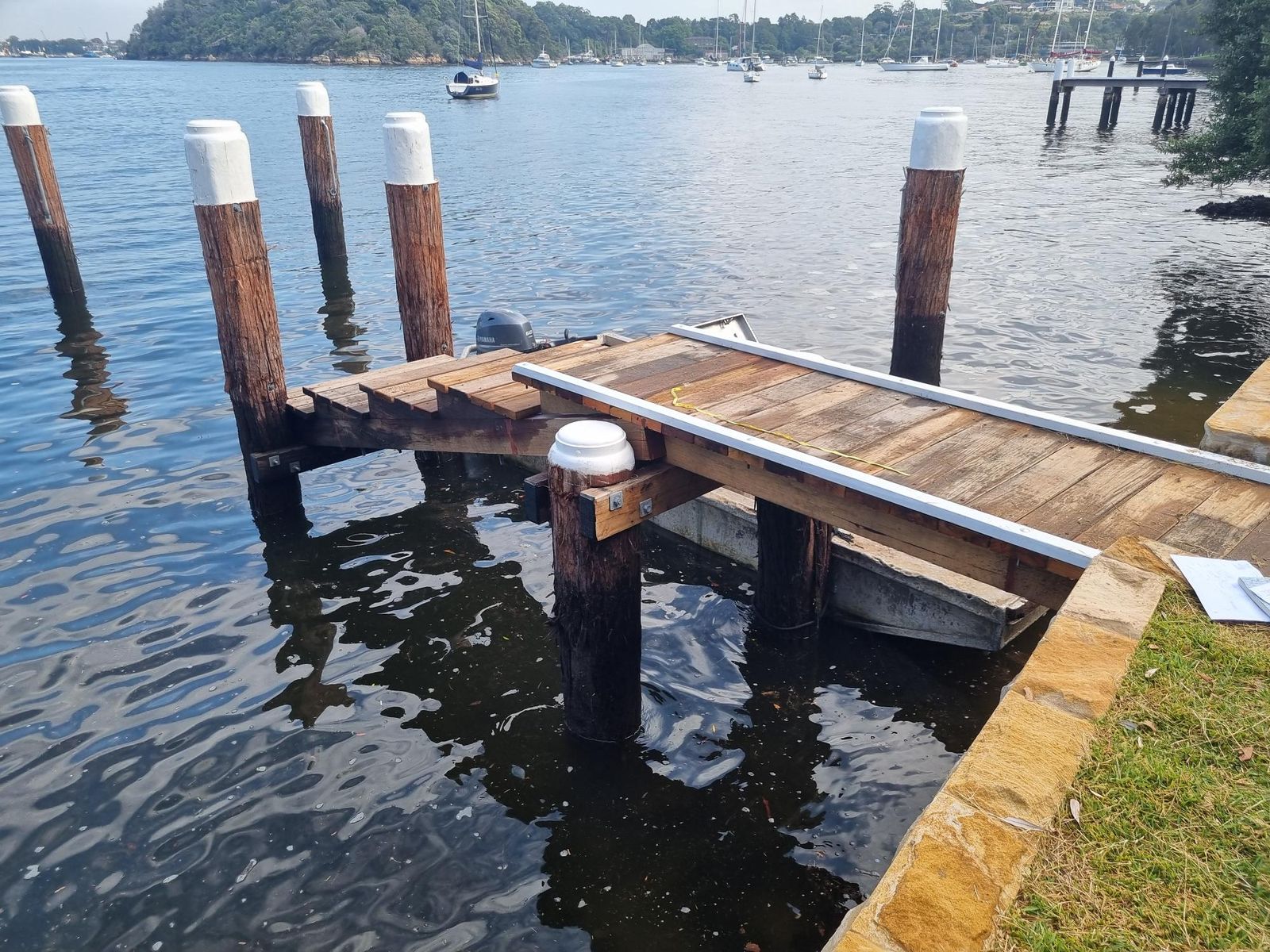
Piles hold everything up, and each one has to reach and hold in the seabed you have, whether that's sandstone, sand or deep mud. The number of piles, their length and their material (timber, steel or concrete) all affect the price, as does how hard the seabed is to work in.
Materials and durability
Hardwood timber, aluminium and composite decking, galvanised or stainless fixings: each has a different upfront cost and a different life in salt water. A cheaper material that needs replacing sooner can cost more over the life of the jetty.
Access for marine plant
Most jetty works are carried out from the water using barges and piling equipment. Sites that are hard to reach, have low bridges or overhead clearance issues, or need equipment brought in by land down a steep block generally cost more.
Ramps, pontoons, steps and skids
Every extra element adds cost: a hinged ramp and floating pontoon, tidal steps, handrails, a boat skid or slipway, lighting and water or power services. Planning them together as one design is usually cheaper than adding them later.
Site conditions
Exposure to boat wash and weather, the condition of the existing seawall, removing an old jetty, heritage settings and environmental features such as seagrass can all change what is needed.
Approval and report costs
Most jetties, skids and slipways on Sydney Harbour need development consent, usually from Transport for NSW. The approval process involves plans, supporting reports and application fees, and the time it takes is part of the project. Our jetty approval guide explains the steps.
Ongoing costs: your waterfront lease or licence
A private structure over a public waterway generally comes with an ongoing lease or licence, and that usually means annual rent. On Sydney Harbour and its tributaries, domestic waterfront leases and licences are managed by Transport for NSW. On other NSW waterways, Crown Lands issues domestic waterfront licences and publishes a fact sheet on how domestic waterfront rent is calculated. Check the arrangements that apply to your property, as they differ between waterways and can change.
Maintenance is the other ongoing cost. Regular jetty inspections help catch problems while repairs are still small.
How good planning keeps costs predictable
- Design to the site. Getting length, pile positions and materials right for your water depth and seabed avoids over-building and costly changes later.
- Design to the rules. A design that suits the approval requirements from the start avoids redesign fees and delays.
- Plan everything at once. A jetty, ramp, pontoon and skid planned together share piles and approvals.
Getting comparable quotes from jetty builders
When you ask several jetty builders in Sydney for a price without a clear design, each one quotes their own idea of your jetty. One includes a pontoon and another doesn't; one prices hardwood and another composite. The quotes can't be compared, and the cheapest often isn't the same job.
Waterlink plans and designs the structure first, so every builder you approach prices the same scope: the same length, layout, piles and materials. That makes the quotes comparable and keeps the jetty construction cost you sign up to clear. The marine contractor you choose then carries out the works to the approved design.
Want a realistic picture for your site? Contact us for a free consultation and we'll talk through what your jetty, skid or slipway is likely to involve.