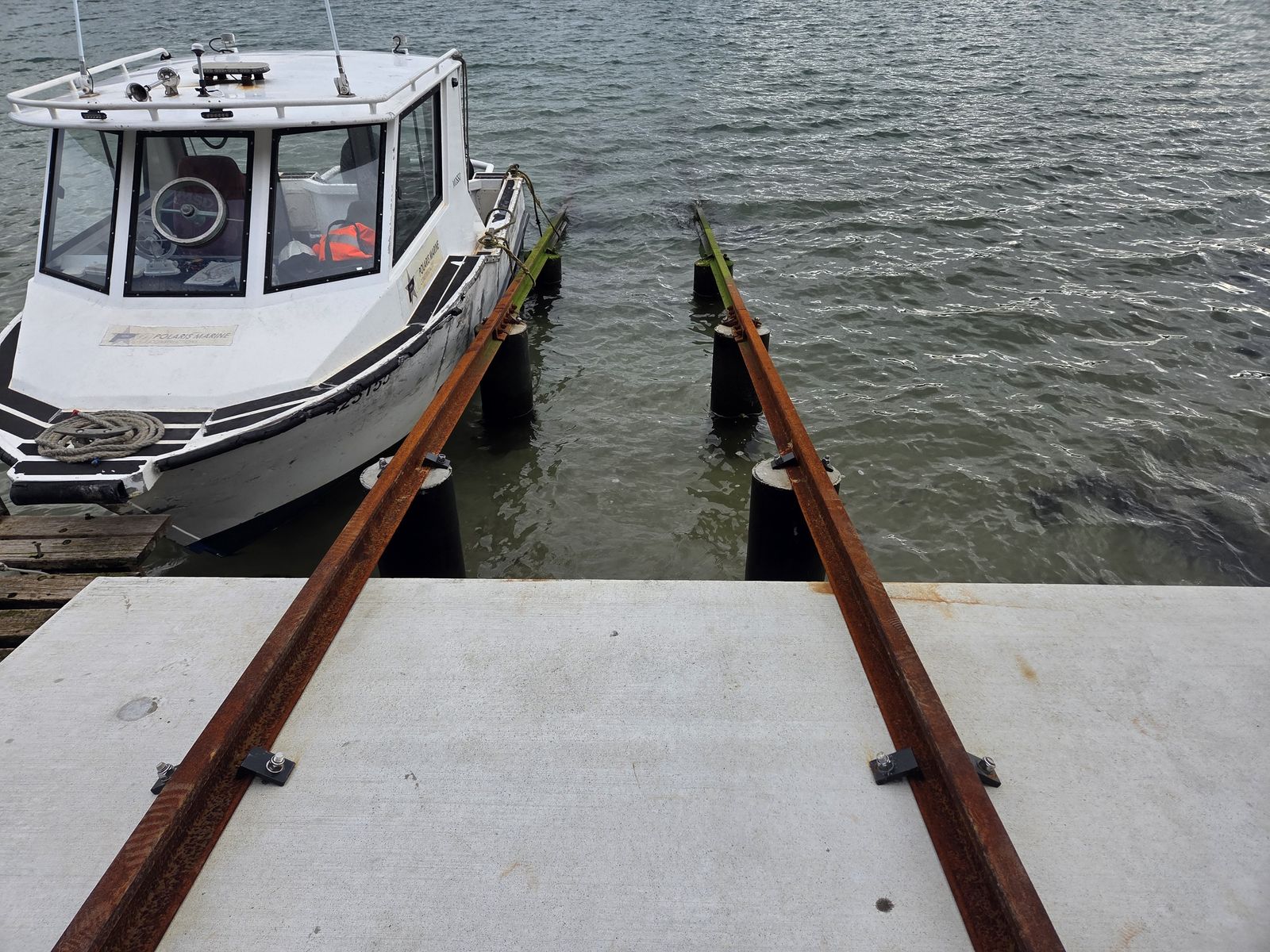
A slipway on Sydney Harbour, at your own home
A slipway or boat skid lets you pull a boat up out of the water and keep it on your own foreshore, instead of leaving it on a mooring or a trailer. Done well, it means a quick launch when the tide suits and less time cleaning the hull. Done badly, it means a steep, slippery ramp that only works for a few hours a day.
Waterlink has planned waterfront structures for Sydney homes since 1995. We design slipways and boat skids for waterfront homes on Sydney Harbour, Middle Harbour and the Parramatta and Lane Cove Rivers, planned around your boat, your shoreline and your tides.
Slipway or boat skid: what's the difference?
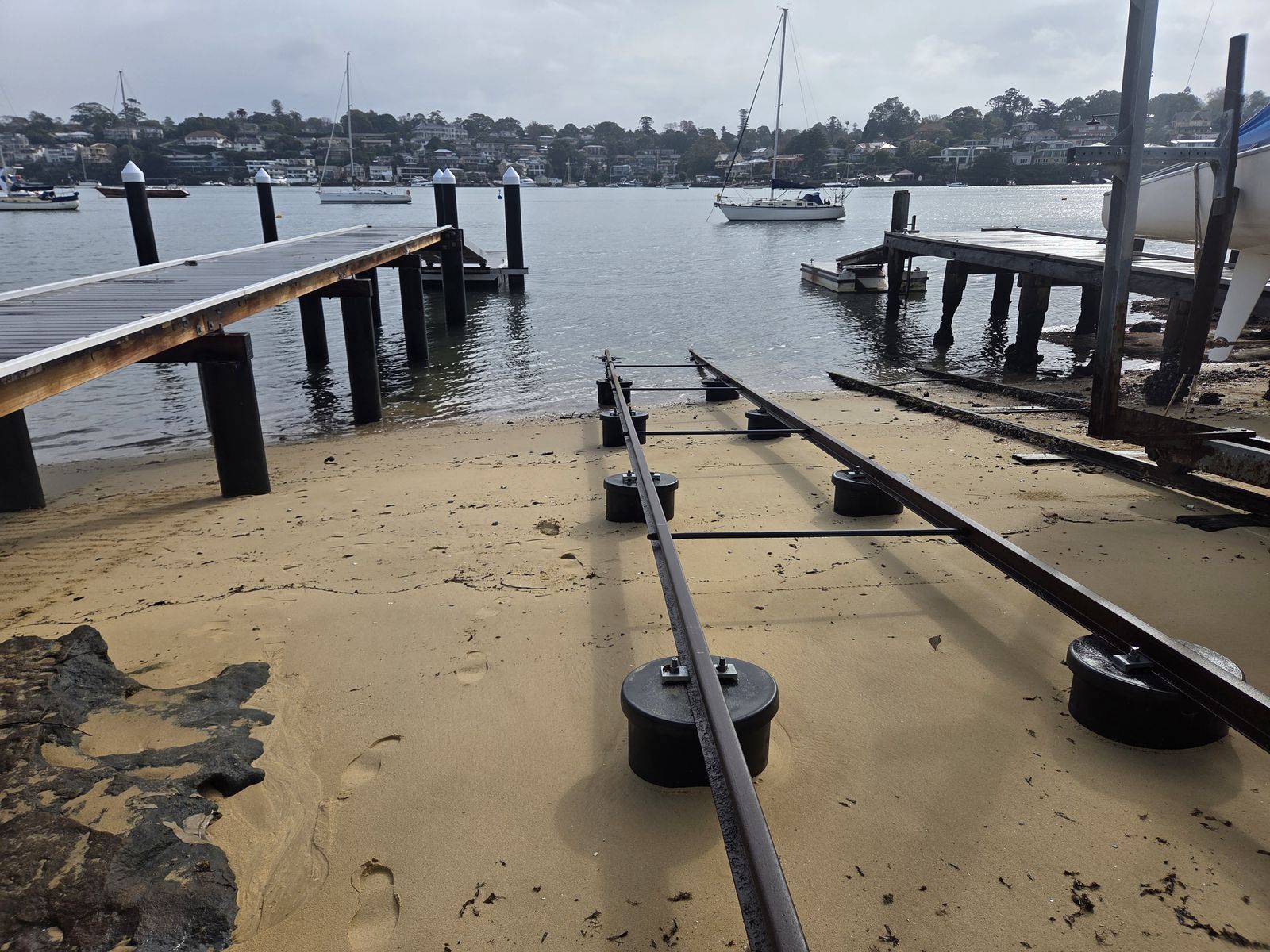
- A boat skid is a pair of rails or runners fixed down the foreshore. A small boat, tinny or kayak is slid or winched up the rails, often on a trolley.
- A slipway is a ramp, usually with rails, running down into the water so a cradle carrying a larger boat can be winched up and down it.
Slipway design
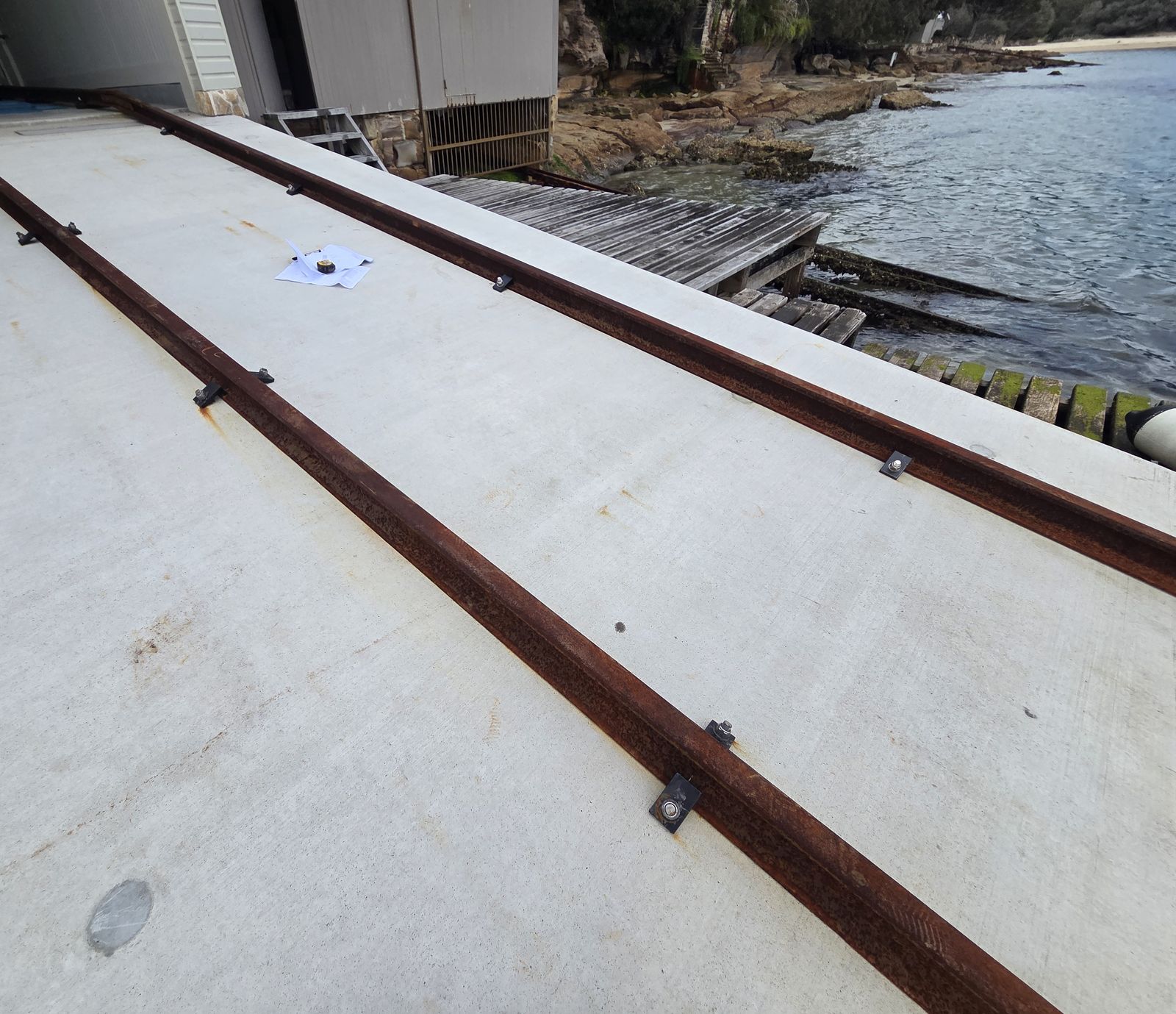
A slipway is a small machine as much as a structure. Good slipway design covers:
- Gradient. Too steep and the boat is hard to control; too flat and the rails run a long way before reaching water deep enough to float the boat.
- Reach at low tide. How far the rails need to go to be usable for your boat and your tides, so you aren't limited to launching at high tide.
- Cradle and winch. The slipway cradle has to suit the hull, and the winch has to suit the boat's weight and the slope.
- Rails and footings. Rails are fixed to suit the shoreline, whether sandstone rock shelf, sand or soft mud.
- Durability. Rails, cradles and fixings sit in the tidal zone, so materials and details are chosen to last in salt water.
Boat skid design
A boat skid is simpler, but the same principles apply. Rail spacing and width suit your boat, the skid material has to let the hull slide without damage, and the rails need to reach usable water. A skid often sits beside a jetty, seawall or steps, so we plan them together.
Slipway rules and approval
Slipways and skids are water-based development. For most water-based development within Sydney Harbour, including slipways, Transport for NSW is the consent authority, so a slipway generally needs development consent just like a jetty. Our jetty and slipway approval guide explains the process, and our jetty and slipway cost guide covers what drives the price.
Pairing a slipway with a jetty
Many owners combine a skid with a jetty so the boat can be stored on the skid and boarded from the jetty. See our jetty design ideas and layouts. If your existing slipway or skid is worn or damaged, a jetty and slipway inspection will tell you whether to repair or replace it.