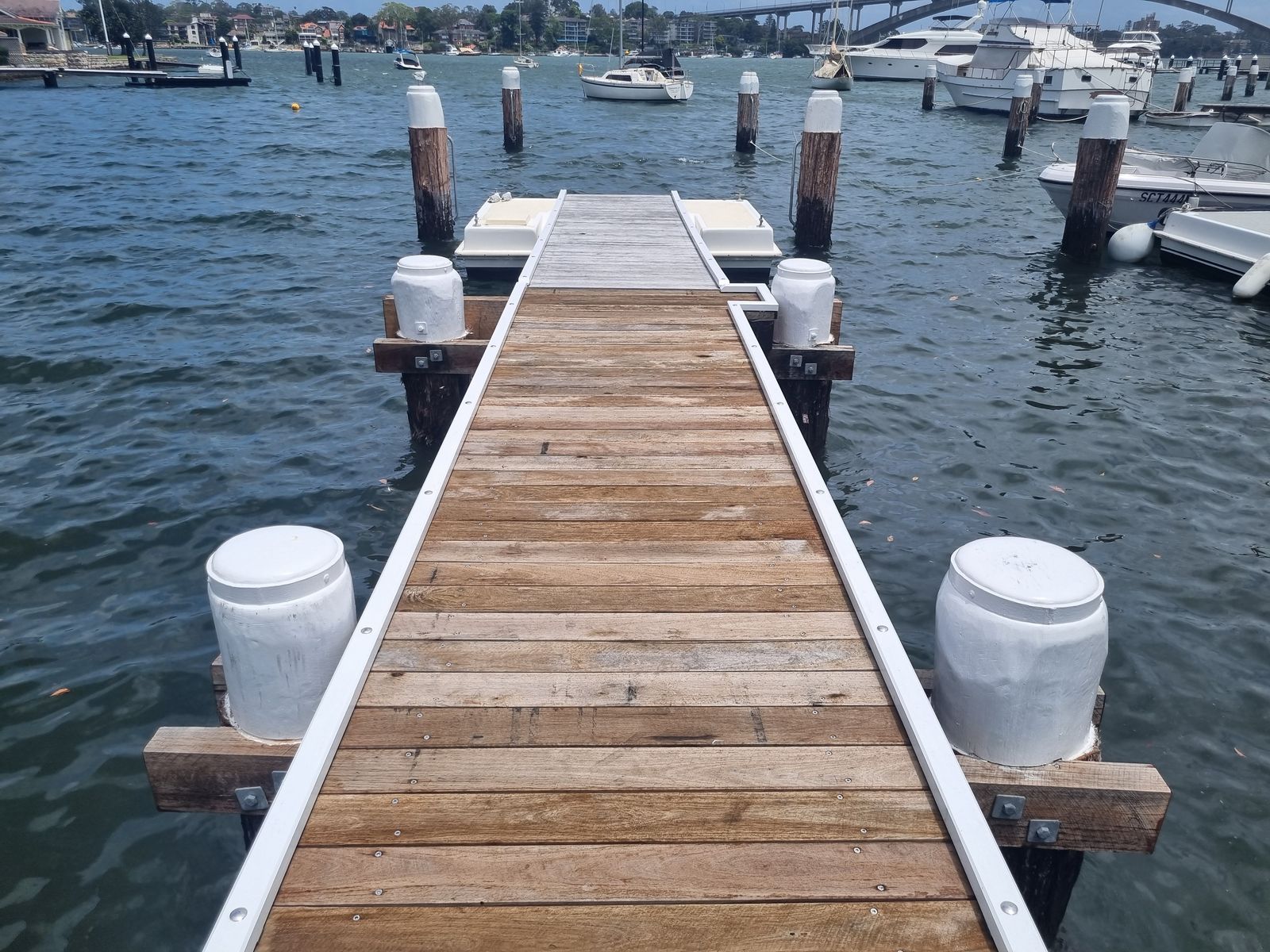
What is a private jetty?
A private jetty is a structure that runs from a waterfront property out over the water, built for the owner's own use: getting on and off a boat, launching a kayak, swimming or simply sitting by the water. Because it extends over the waterway, which is publicly owned, a private jetty in NSW generally needs development consent and an ongoing lease or licence to occupy the waterway.
Waterlink has been planning waterfront structures for Sydney homes since 1995, and our team brings more than 30 years of combined planning experience to every jetty we design. We plan the jetty around your site, the way you use the water and the requirements of the authority that will assess it.
Jetty design ideas
The best jetty design ideas start with how you want to use your waterfront:
- A boating jetty with enough length and depth to tie up a runabout at most tides, often with mooring piles and a pontoon.
- A small craft jetty for kayaks, paddleboards and a tinny, often paired with a boat skid or slipway so the boat can be stored out of the water.
- A swimming and fishing jetty with tidal steps or a ladder down into the water and room to sit.
- A low-profile jetty that keeps views open and sits comfortably in a heritage or bushland foreshore.
Jetty design layout options
Most private jetties on Sydney Harbour follow one of a handful of layouts. Which one suits you depends on water depth, the space off your frontage and the neighbouring structures:
- Straight jetty: a single walkway running out from the shore. Simple and compact, and often the easiest to fit between neighbours.
- L-shaped jetty: the walkway turns at the end to run alongside the berth, giving a longer edge to board a boat.
- T-head jetty: a wider platform across the end, useful for boarding and for sitting by the water.
- Jetty with ramp and pontoon: a fixed jetty joined by a hinged ramp to a floating pontoon, so the boarding level rises and falls with the tide. See mooring piles, jetty ramps and steps.
- Jetty with steps: stairs or tidal steps from the seawall or jetty down to the water.
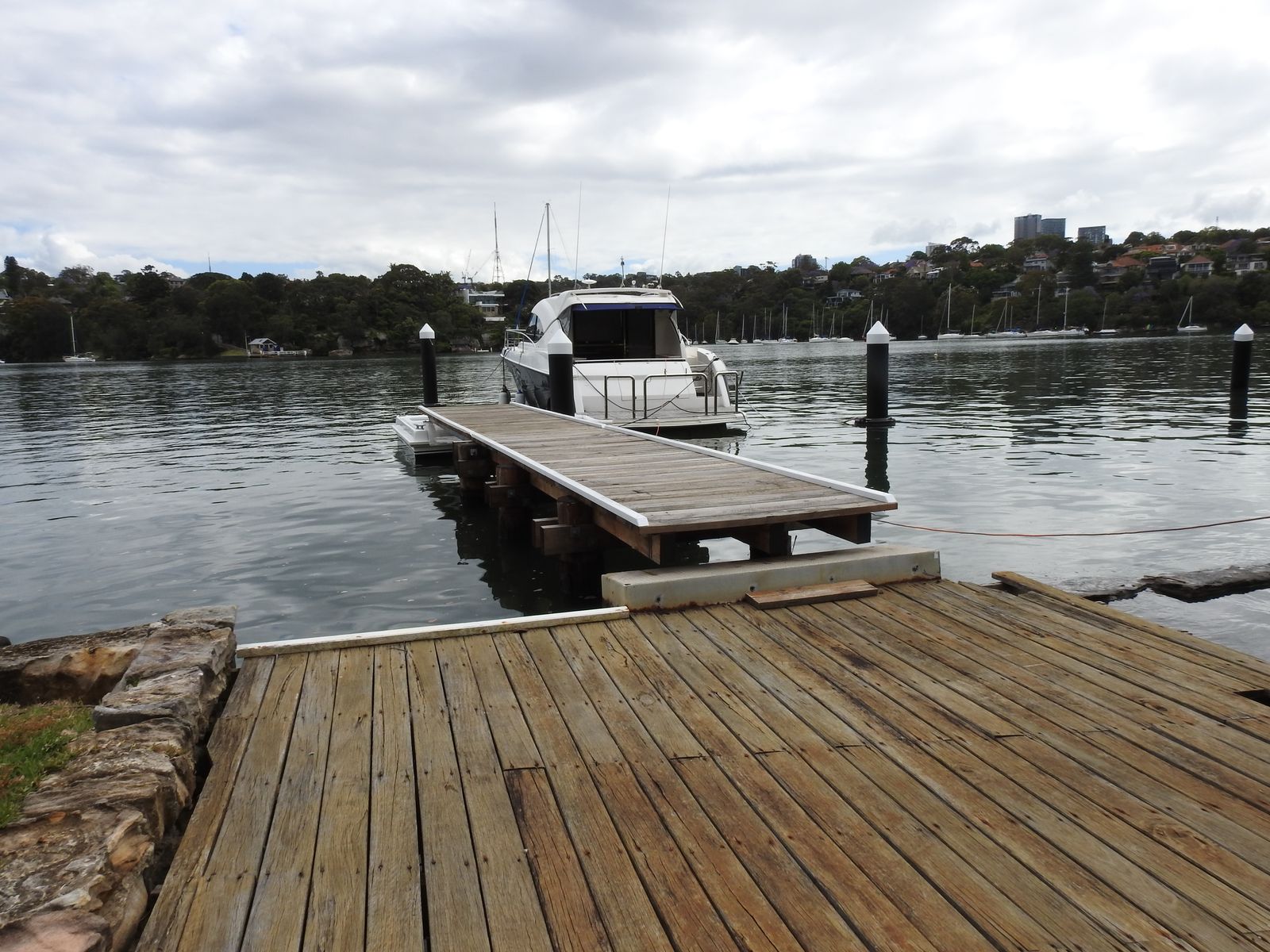
What we consider in every jetty design
- Water depth and tides. A jetty that works at high tide can leave a boat sitting in mud at low tide. We plan the length and layout so the jetty is usable across the tides you actually get.
- Shoreline and seabed. Sandstone shelf, sand, mud and seawalls all call for different approaches to piles and footings.
- Boat wash and exposure. Busy stretches of the Parramatta River and the main harbour see regular ferry and boat wash; sheltered bays in Middle Harbour and the Lane Cove River behave differently.
- Materials. Hardwood timber, aluminium and composite decking, with timber, steel or concrete piles, each suit different sites, looks and budgets.
- Neighbours and navigation. Side setbacks, views and how boats move around your frontage all matter to the assessing authority.
Jetty design guidelines
There is no single rule book for private jetty design on Sydney Harbour, but there are clear expectations. Transport for NSW is the consent authority for most water-based development within Sydney Harbour, and it assesses each application on matters such as the size of the structure, navigation, the effect on neighbours, visual impact and the marine environment. The NSW Marine Estate program has also been reviewing how jetty height, width, orientation and materials affect seagrass, and on some NSW estuaries it has mapped where new private jetties are likely to be suitable. We plan your design to suit these expectations from the first sketch. Our guide to jetty approval on Sydney Harbour explains the process step by step.
Jetty design examples
The best way to see what works is to look at real jetties. Browse examples of our jetty designs in the project gallery, from timber walkways on the Parramatta River to jetties with pontoons in Middle Harbour, or see the suburbs where we plan jetties.
Already have a jetty?
If your existing jetty is showing its age, a jetty inspection and repair report tells you whether repairs will do the job or whether it is time to plan a replacement. Wondering about budget? Read what drives the cost of a jetty in Sydney.